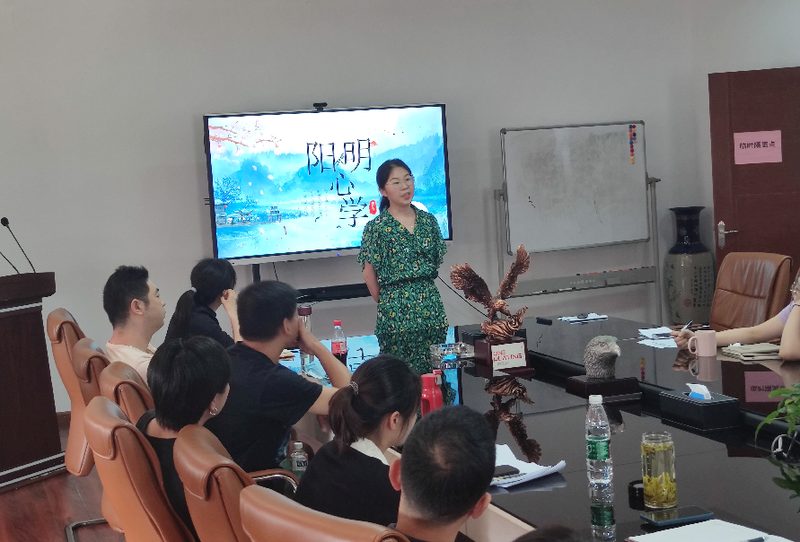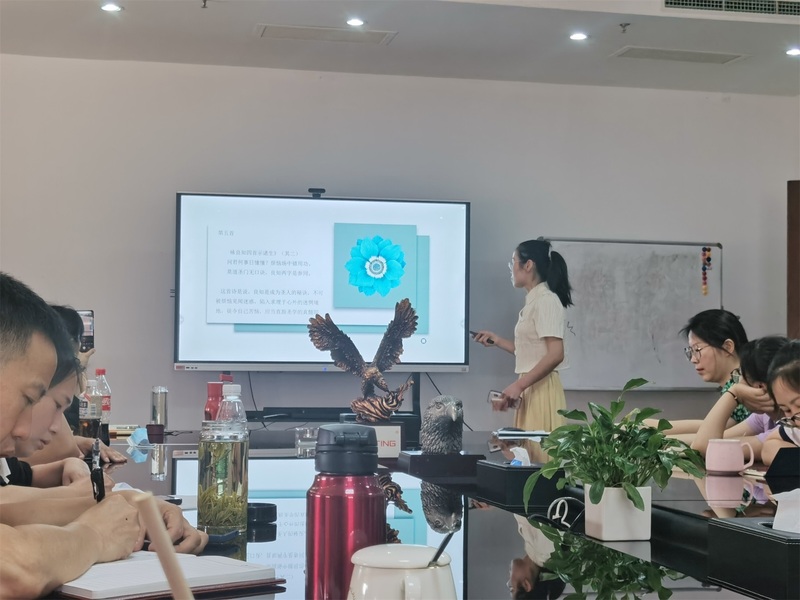
After the summer solstice, the blazing sun shone upon the city of Shanghai, and the city finally began to step out of the shadow of the pandemic. Shanghai Gaopeng also welcomed its first offline learning-sharing session since the outbreak.
This session, centered on the chronicle of Wang Yangming, presented us once again with the *Instructions for Practical Living*.
This time, we adopted a combination of lectures and videos to comprehensively showcase the major thoughts and achievements of Wang Yangming's life.
First, our Gaopeng lecturers gave presentations on Wang Yangming's poetry and his students—topics that had not been elaborated on in previous sessions. Everyone listened with extraordinary attentiveness.
As many new colleagues have joined the Gaopeng family, including some who are encountering Yangming's philosophy of the mind for the first time, the lecturers carefully selected a CCTV program, *China in the Classics*, for the afternoon session, which vividly portrayed Wang Yangming's life.
The whole story centered on the idea that "knowledge is the beginning of action, and action is the completion of knowledge."
When Wang Yangming discussed the unity of knowledge and action, he often used calligraphy as an example. He said: "If I want to write the character 'zhi' (knowledge), but what I actually write when I pick up the pen is 'xing' (action), then to truly know how a character is written, you must put it into practice." Therefore, once you have "knowledge," you must act on it.
Wang Yangming's thought of the "unity of knowledge and action" tells us that action is the only path to success. Knowledge divorced from action is empty knowledge, and action divorced from knowledge is blind action. Only by deeply understanding what we have learned through practice, and then testing it in the process of learning, can we truly achieve the "unity of knowledge and action."
When studying Yangming's philosophy, we must avoid treating it merely as a discipline or a body of knowledge. Instead, we should constantly introspect and ask ourselves: Are our words and deeds consistent? Are we staying true to our original heart? It is not a knowledge system that can grant certain abilities instantly, but a mentor for spiritual cultivation and a mirror of conscience, allowing us to always observe our inner selves. Only by remaining true to our original heart can we live and work with ease and composure.