Summary: Copper prices are expected to remain rangebound, hovering at low levels in the short term. Fundamentals are mixed, with the main contradiction centered on the macro landscape. As U.S. stimulus policy failed to reach an agreement before the election last week, the U.S. dollar index rose. However, the bearish pressure has largely been released, so the dollar index is unlikely to continue rising next week.
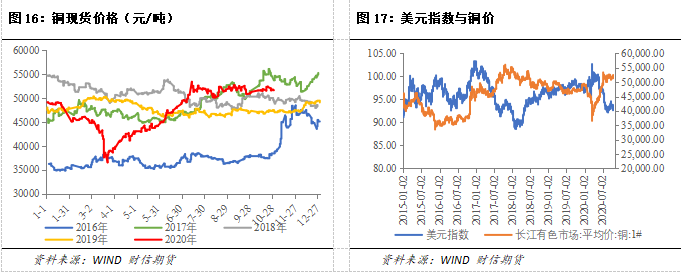
Core view: Copper prices are expected to remain rangebound, lingering at low levels in the short term. Fundamentals are mixed, with the main contradiction on the macro side. With U.S. stimulus policy failing to reach a deal before the election last week, the dollar index strengthened, but bearish pressures have largely been priced in, making further dollar gains less likely next week. Tuesday will see the U.S. Election Day, which will affect copper prices in the short term. Polls still favor Biden; while expectations are becoming clearer, there are also concerns over whether the power transition will go smoothly. Uncertainty in short-term financial markets persists, and given short-term macro factors, prices will likely remain rangebound, expected to stay in the range of 50,500-51,800 yuan/tonne. In addition, copper prices fell to recent lows last week, which stimulated downstream restocking sentiment. Premiums/discounts are expected to edge up to a premium range of 150-200 yuan/tonne.
Risks: The final composite PMI for China's copper downstream sector in October rose month-on-month, and real estate developers and cable companies are expected to rush to complete work before year-end.
I. Supply side
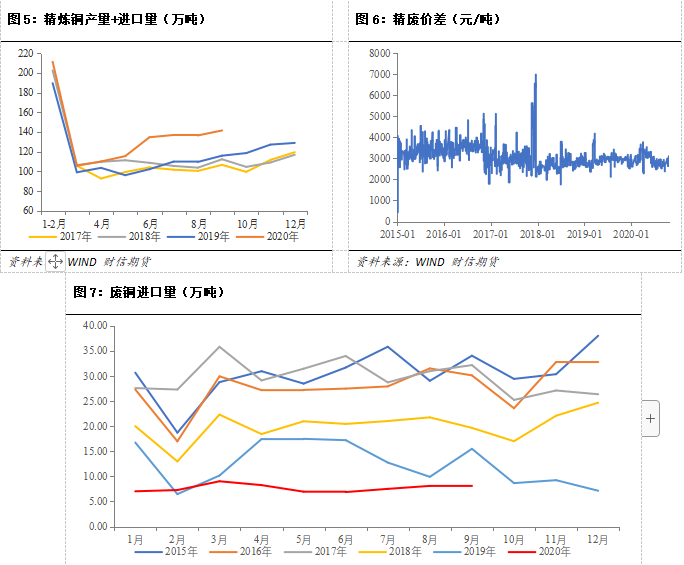
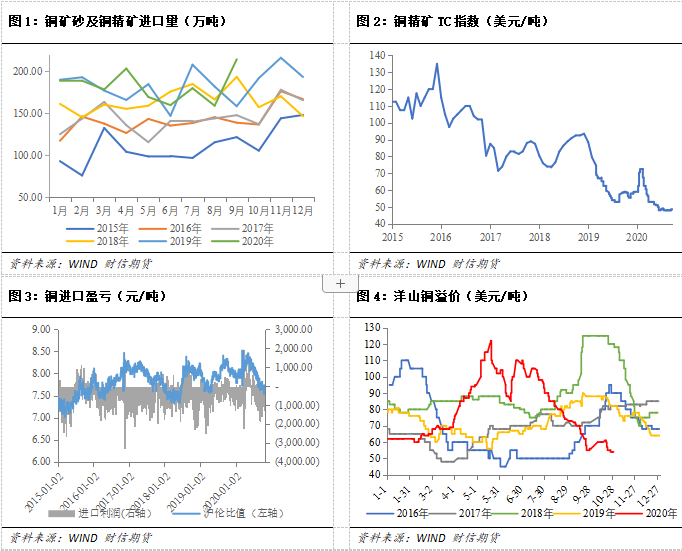
On the supply side, the Candelaria mine union and management have still not reached agreement on wage negotiations, extending the strike, but the impact on the market is limited. The import copper concentrate index published by SMM was $48.22/tonne last week, down $0.78/tonne from the previous week. However, the October copper concentrate index rose by $0.17/tonne compared with September. Data suggest copper concentrate supply has eased versus last month, and issues on the mine side have basically come to an end. Domestic electrolytic copper production and imports increased substantially year-on-year, alleviating concerns over tight copper supply.
On scrap copper, sellers continued to hold firm pricing attitudes, but as imports are liberalized, buyers' enthusiasm for scrap copper purchases has cooled somewhat while awaiting the actual arrival of imports. Given the remaining quotas for Q4 and the opening of recycled copper imports, scrap copper supply is unlikely to remain tight in Q4. The refined-scrap copper price spread continued to narrow slightly this week.
II. Inventories
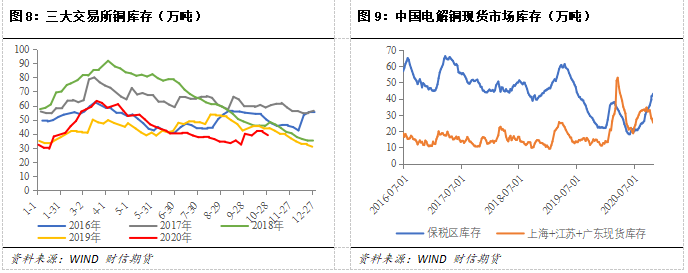
As of October 30, the copper inventories corresponding to the three major global copper futures exchanges—LME, SHFE and COMEX—were approximately 171,300 tonnes, 139,700 tonnes and 79,900 tonnes, respectively, totaling 390,900 tonnes, down slightly from the previous week.
China's electrolytic copper spot market inventories slipped slightly. Shanghai region copper inventories stood at 147,400 tonnes, Guangdong at 88,600 tonnes, and Jiangsu at 16,600 tonnes. Domestic mainstream regional spot inventories fell by about 20,000 tonnes week-on-week. Bonded zone electrolytic copper inventories were 431,000 tonnes, showing accumulation for several consecutive weeks. As the import window remains closed, inventories shifted from domestic to bonded zones last week.
III. Demand side
According to SMM survey data, the final composite PMI for China's copper downstream industry in October was 50.17, up 0.59 month-on-month and down 0.49 year-on-year. Overall, the transportation sector saw the largest increase, followed by the power sector. The construction sector was affected by the "three red lines" policy, with completed floor area declining.
(1) Wire and cable
According to SMM surveys, the operating rate of wire and cable enterprises in October was 94.68%, down 1.35 percentage points month-on-month and up 1.42 percentage points year-on-year. Large enterprises had an operating rate of 101.64%, medium enterprises 59.78%, and small enterprises 69.64%.
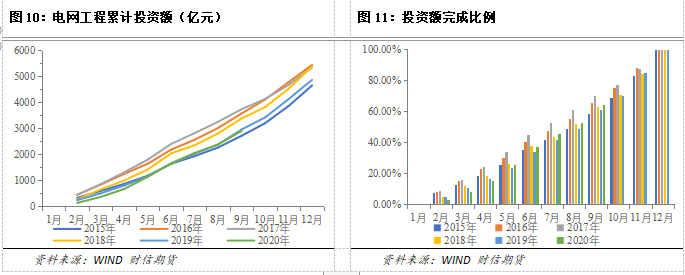
Affected by lower real estate transaction volumes, wire and cable operating rates continued to weaken slightly month-on-month in October. However, orders from State Grid have rebounded, and cable operating rates are expected to recover somewhat in November, albeit with limited growth.
(2) Home appliances and automobiles
According to SMM surveys, driven by better export orders, the production scheduling volume of the air-conditioning industry in October rose month-on-month, reversing the downward trend of the previous three months, though the increase was not obvious.
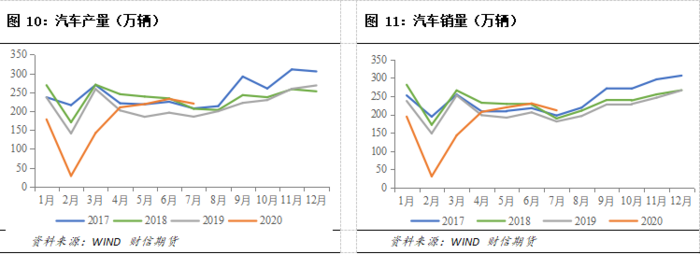
The automobile industry has entered its peak season, with orders received up from September, leading to continued sales growth and declining inventories. The upward trend is expected to be maintained going forward. In addition, production of new energy vehicles has started to increase, which has also boosted orders for lithium-ion batteries.
(3) Summary
Overall, copper demand improved somewhat in October. According to SMM data, production conditions will improve further in November. With year-end sprint demand from both the power grid and real estate sectors, copper demand over the next two months looks optimistic. In addition, although Europe is experiencing a second wave of the epidemic and some countries have imposed lockdowns, the current lockdowns are not as stringent as the first round. Major ports have not been closed, and logistics remain smooth. November could see simultaneous stimulation from both domestic and external demand.
IV. Prices
Copper prices remained rangebound at high levels in October. Shanghai copper climbed to 52,850 yuan/tonne in the first half of the month, but fell last week due to European lockdowns and the failure of U.S. fiscal stimulus to be agreed before the election. The SHFE main contract finally closed at 50,940 yuan/tonne, up 0.02% for the month. Spot copper rose by 250 yuan/tonne. Premiums/discounts fell first and then rose, with the average premium at the end of the month at 155 yuan/tonne.
V. Conclusion
Fundamentals are mixed. The crisis on the copper supply side has been resolved, removing support for copper prices. Demand was relatively good in October, and with year-end sprint expectations for the power grid and real estate sectors, this is positive for copper prices. At present, the main contradiction lies at the macro level. Last week, France, Germany and other countries introduced new lockdown measures. Although not as strict as the first round, they still suppressed prices to some extent in the short term. In the U.S., stimulus policy failed to reach agreement before the election, pushing the dollar index higher; bearish pressure has now largely been released, and the dollar index is unlikely to continue rising this week. Tuesday will bring U.S. Election Day. Polls still favor Biden, and while expectations are becoming clearer, there are concerns about whether the power transition will go smoothly, leaving uncertainty in short-term financial markets. Therefore, copper prices are expected to remain rangebound and hover at low levels in the short term.