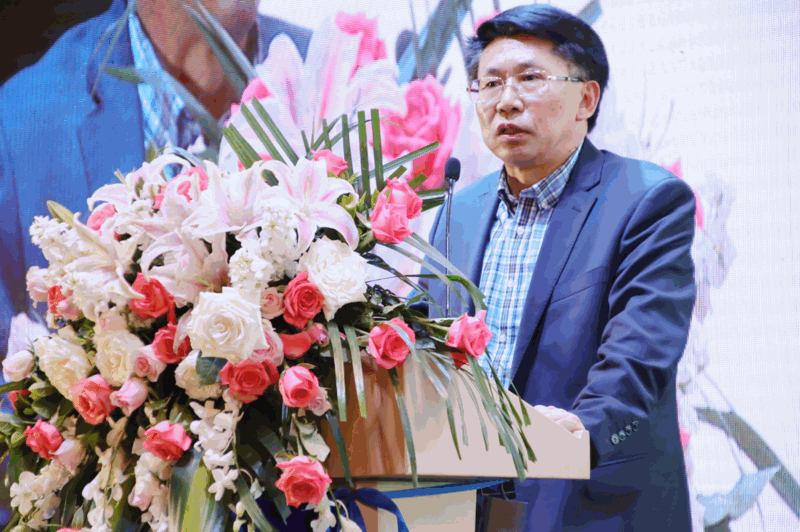
On April 28–29, 2019, the 4th Nickel-Cobalt-Lithium-Manganese Industry Chain Summit 2019 was held in Yibin, Sichuan. The summit was hosted by SMM, with Yibin Libao as the title sponsor, Yuanyu Environmental Protection and Keda Clean Energy as co-organizers, the Yibin Municipal Bureau of Industry and Civil-Military Integration as the guiding unit, and the Jiang'an County People's Government as the supporting unit. Zhou Youming, General Manager of Jinchuan Group Nickel Salt Co., Ltd., delivered a speech analyzing China's nickel sulfate industry in 2019.
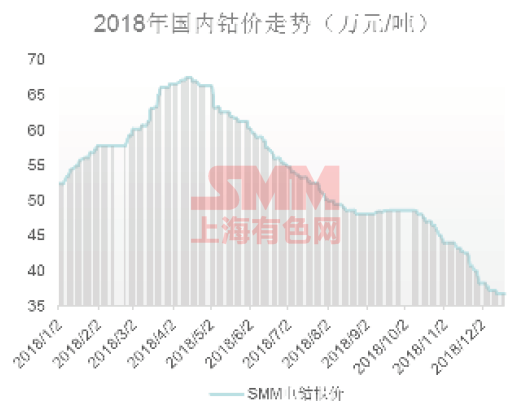
Domestic nickel market consumption: nickel consumption in the electroplating industry is expected to be about 60,000 tonnes for the full year, accounting for 5%; nickel consumption in the battery industry increased to 96,000 tonnes, accounting for 8%; nickel consumption in the non-ferrous alloy industry is expected to be about 60,000 tonnes, accounting for 5%; and other segments account for 2% in total. Cobalt prices stopped rising and reached an inflection point in April 2018.
Review of cobalt metal prices in 2018: Overview of ternary precursor market. According to data from the China Association of Automobile Manufacturers, production and sales of new energy vehicles in 2018 reached 1.27 million and 1.256 million units respectively, up 59.9% and 61.7% year-on-year. Production and sales of new energy vehicles are expected to exceed 1.5 million units in 2019.
Main applications of nickel in the battery industry: Nickel-cadmium (Ni-Cd) batteries were the earliest battery type used in mobile phones and other devices, but they exhibit a severe 'memory effect' during charging and discharging. In addition, cadmium is toxic, so Ni-Cd batteries have been largely phased out of digital device battery applications.
Nickel-metal hydride batteries are composed of hydrogen ions and metallic nickel. They store 30% more charge than Ni-Cd batteries, are lighter, have a longer service life, and cause no environmental pollution.
The disadvantages of Ni-MH batteries are that they are more expensive than Ni-Cd batteries and their main performance is inferior to that of lithium batteries.
Ternary lithium batteries are named after the cathode material, referring to lithium batteries that use lithium nickel-cobalt-manganese oxide as the cathode material, abbreviated as ternary lithium batteries. The ternary lithium battery suppliers with the largest market shares are mainly Japanese and Korean companies, such as Panasonic and Samsung. Tesla uses a ternary lithium battery pack composed of more than 7,000 18650 cells.
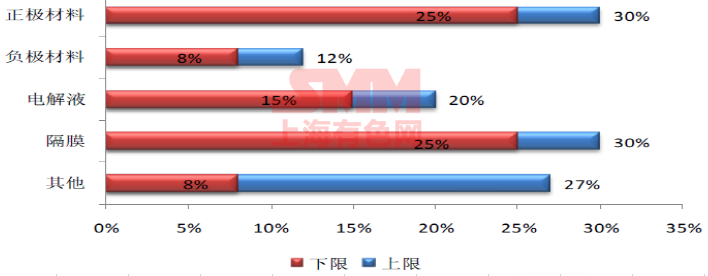
Cathode materials are the key to the industry chain. The lithium battery industry chain mainly includes lithium raw materials, cathode materials, anode materials, electrolytes, separators, and production equipment. Among them, cathode materials account for a relatively large mass proportion in lithium batteries (the mass ratio of cathode to anode materials is 3:1 to 4:1), and they also account for a relatively high share of lithium battery production costs, generally 25% to 30%.
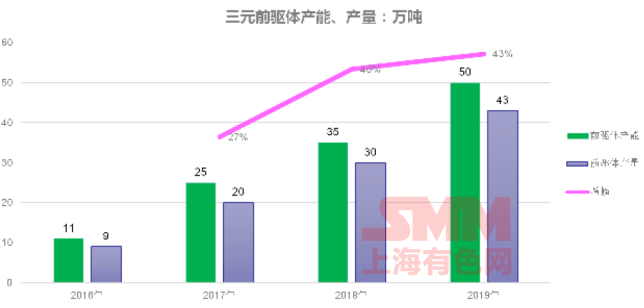
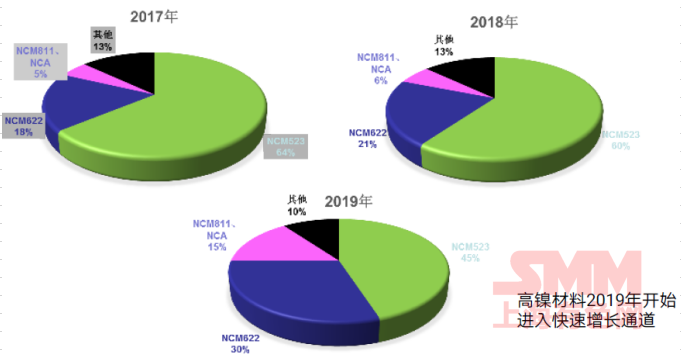
Precursor production capacity will grow at a rate of more than 40% in both 2018 and 2019. High-nickel materials began a rapid growth track in 2019.
Analysis of China's nickel sulfate industry in 2019: Major nickel sulfate products include nickel sulfate heptahydrate, nickel sulfate hexahydrate, and anhydrous nickel sulfate. The commercially available nickel sulfate is mainly nickel sulfate hexahydrate. Industrial nickel sulfate is produced in accordance with the chemical industry standard (HG/T 2824-2009). Nickel sulfate hexahydrate has two variants: the α-type, which forms blue tetragonal crystals, and the β-type, which forms green monoclinic crystals. When heated to 103°C, it loses six waters of crystallization. It is readily soluble in water, slightly soluble in ethanol and methanol, and its aqueous solution is acidic. It is slightly soluble in acids and ammonia water and is toxic. Since May 1, 2015, nickel sulfate (including nickel sulfate with water of crystallization) has been included in the Catalogue of Hazardous Chemicals (2015 edition) and must be managed as a hazardous chemical.
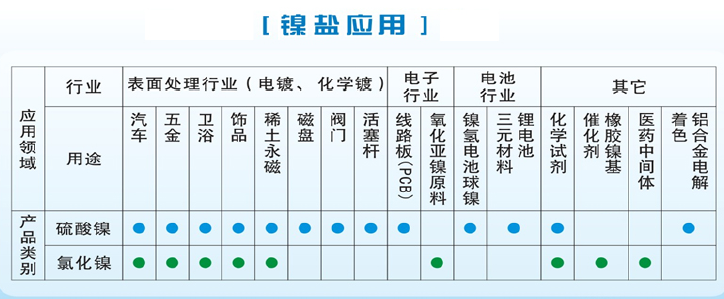
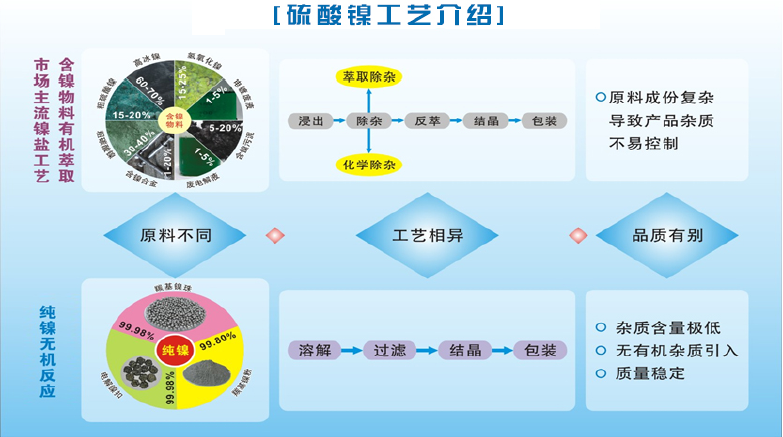
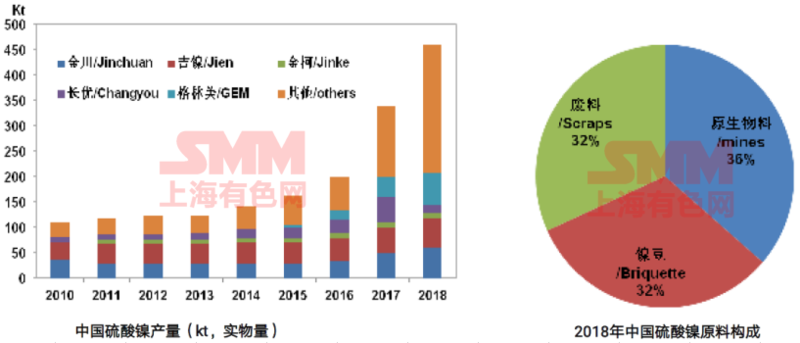
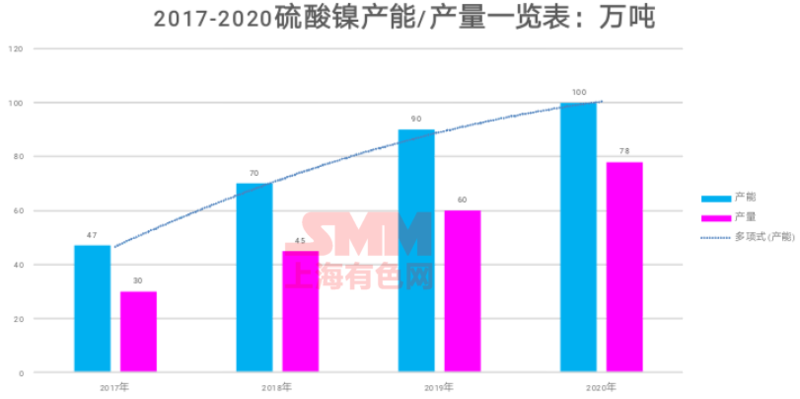
Uses of nickel sulfate: Production process of nickel sulfate: Nickel sulfate output in 2018. In 2017, China's nickel sulfate production capacity was 440,000 tonnes, with output of 326,000 tonnes, up 60% year-on-year. In 2018, China's nickel sulfate output was expected to be between 430,000 and 500,000 tonnes, an increase of about 38% year-on-year, and global output was expected to reach about 700,000 tonnes.
Major nickel sulfate capacity expansion in the past two years: The demand outlook for nickel from new energy has spurred rapid expansion of nickel sulfate production capacity. Global nickel sulfate capacity is expected to expand to more than 1 million tonnes by 2020, a further 40% increase from 2018. At the same time, Chinese companies have begun to enter laterite ore hydrometallurgical projects in Indonesia to meet future demand for nickel sulfate raw materials.
Rapidly expanding nickel sulfate capacity: Future development trends of nickel sulfate. Users' demands for new energy vehicles are increasing in terms of driving range and quality, while prices must continue to fall. These demanding requirements ultimately have to be transmitted upward from the end of the industry chain to upstream stages. At present, the development of new energy vehicles has been elevated to a national strategy, and local governments are formulating industrial development plans and leading and promoting industrial development. Various types of capital have begun to flood into this emerging industry. As a result, the day of overcapacity and industry reshuffling is not far away! Therefore, future competition will definitely be competition among supply chains. With further integration of the industry chain, nickel sulfate may gradually become an intermediate product. The close-knit industry chain from laterite ore to cathode materials built jointly by Tsingshan, GEM, and Brunp will change the industry rules!
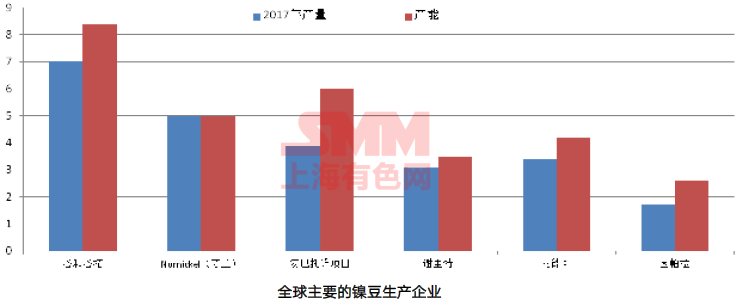
New important raw materials for nickel sulfate — nickel briquettes/nickel powder: Global nickel briquette production capacity is nearly 300,000 tonnes, with output of 240,000 tonnes in 2017. Current LME nickel inventories total nearly 210,000 tonnes, of which nickel briquette inventories are about 167,000 tonnes, accounting for 80%. Based on China's nickel sulfate output, the amount of nickel sulfate produced from raw materials such as nickel briquettes and nickel powder in 2018 was about 35,000 tonnes. From this perspective, raw material supply will not be a bottleneck for nickel sulfate output, and nickel sulfate supply is relatively flexible. It is estimated that in 2019, the physical volume of nickel sulfate produced from metallic nickel briquettes and nickel powder will exceed 200,000 tonnes.
Advantages and disadvantages of self-dissolving nickel briquettes for precursor production: Since 2017, some precursor manufacturers have purchased nickel briquettes/nickel powder to produce liquid nickel sulfate for cost reasons. In 2018, self-dissolved nickel briquettes/nickel powder amounted to 35,000 tonnes of nickel metal content, and in 2019 this is expected to reach about 45,000 tonnes. Advantages of self-dissolving nickel briquettes/nickel powder: reduced crystallization and re-dissolution costs and lower nickel sulfate transportation costs (although alkali consumption will increase). Disadvantages: the need to invest in production lines, limited raw material availability, poor adaptability, and greater safety risks!
Risk: As major nickel producers continue to adjust their product structures and build industry chains, the supply of nickel briquettes will gradually decrease in the future.