As the number of new energy vehicles continues to grow, the residual value challenge facing pure electric vehicles in the second half of the game is surfacing.
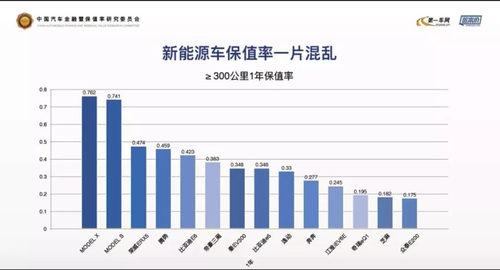
On August 21, at the 2019 New Energy Vehicle User Value and Residual Value Summit, the China Automotive Finance and Residual Value Research Committee released the "2019 China Auto Residual Value Report", which showed that the average residual value rate of mainstream new energy vehicles over the past three years was only 32.31%. After analyzing the residual value of pure electric vehicles over the past year, it was found that aside from Tesla, which remained above 70%, residual value rates for other models were generally low.
At present, with the rapid development of China’s new energy vehicle market, the upstream and downstream industry chains are continuously improving. However, the accompanying problem is that factors such as low product quality, outdated technology, and a lack of industry testing standards in the early stages of development have made low residual value one of the key obstacles to the circulation of used new energy vehicles in the market. As the upstream and downstream industry chains gradually improve, issues such as residual value management for new energy vehicles and the protection of value for the new energy vehicle community are becoming one of the primary challenges facing the industry.
The awkward situation of used electric vehicles: At No. 123, West 4th Ring South Road, Fengtai District, Beijing, stands the renowned used motor vehicle trading center — Huaxiang Used Car Market. In this "paradise" of used cars, dealers can be roughly divided into three categories: the first is high-end dealers with large showrooms; the second is mid-end dealers with storefronts but smaller scale; and the third is low-end dealers with only open-air stalls.
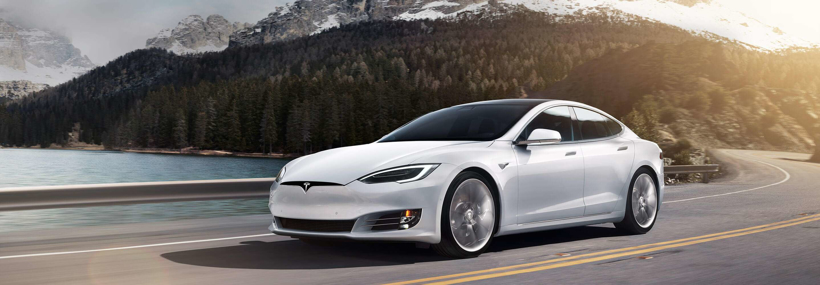
In a corner of a high-end showroom sits a Tesla MODEL S first registered at the end of 2016. This high-end pure electric vehicle, originally worth 1.02 million yuan, is now listed at half price, with room for negotiation. The salesperson told Gasgoo that the showroom previously had three Teslas, two of which were near-new MODEL X vehicles. Some customers, in order to save delivery time, choose to buy nearly new used cars with mileage and age close to brand-new at Huaxiang. The two MODEL X vehicles were bought by intermediary customers just a week ago.
(Tesla MODEL S) A used car dealer surnamed Yang said: "Apart from Tesla, we don’t accept any other pure electric vehicles." Walking through the entire Huaxiang used car market, in the low-end dealer area, a JAC IEV4 first registered in 2015 with an original value of 126,500 yuan stands out noticeably next to a parallel-parked gasoline car. This early pure electric vehicle, still within its 6-year/120,000 km vehicle and battery warranty, now has a second-hand price of less than 30,000 yuan — a huge depreciation.
From the outside, this IEV4 looks quite new, but the dealer said the vehicle had been in a collision and its actual driving range had severely declined. Unlike an internal combustion engine, the battery indeed has a thermal decay effect that cannot be ignored. After asking several used car dealers, only one said it could sell pure electric vehicles on consignment, but only if the vehicle is within three years old and the brand is limited to Tesla, NIO, and similar. Older electric models would definitely not be sold.
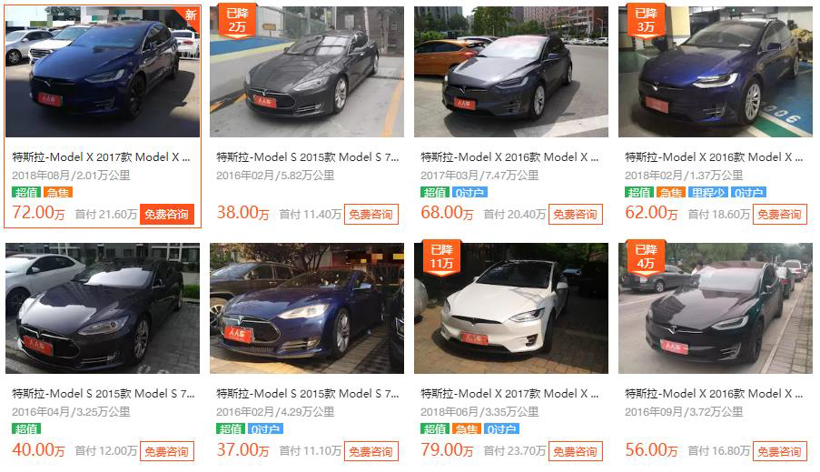
One used car dealer said that he has been in the business for over ten years and has more than twenty used cars in stock, ranging from Geely Emgrand to Maserati Levante, but he has never sold a new energy vehicle. An ordinary used gasoline car can be sold in about a month on average. Models like Honda Crown Road and Toyota Camry are major players in the used car market — they sell well and offer considerable profits. The dealer said helplessly: "The problem with accepting a pure electric vehicle is, first, the long holding period. The biggest issue is that nobody asks about them at all. Electric vehicles are too niche for the used car market, and we won’t tie up our capital in them." A search on vehicle trading websites such as Renrenche, Guazi Used Car, and Youxin Used Car also shows that used pure electric vehicles on sale are mainly concentrated in a few brands such as Tesla, BYD, and BAIC New Energy, and the numbers are small.
(Screenshot from: Renrenche official website)
Hybrids are more "popular". Compared with the awkward situation of domestic pure electric vehicles in the used car market, some Japanese and European hybrid models are performing better in the market. In many used car dealer stores, Toyota, Honda, Volvo and other hybrid models appear far more frequently than pure electric vehicles. Judging from the used hybrid models currently selling in larger numbers, it seems they have gained widespread market recognition, so their used car prices have risen accordingly. In particular, some Japanese hybrid models even have residual value rates higher than traditional gasoline vehicles.
"Toyota hybrid models have longer warranty periods and reliable quality, so their market is better than that of other new energy vehicles," said another used car dealer. Looking at the end-user used car market, apart from Tesla and Japanese and European hybrid models, the market for other used new energy vehicles appears bleak.
The fundamental reason why used car dealers at Huaxiang reject electric vehicles may be that these vehicles currently have no market — once bought, they risk being stuck on the dealer’s hands. Moreover, in terms of sales profit, electric vehicles cannot yet be compared with gasoline vehicles, and there is no guarantee of profit. Today, only some large used car dealers with ample capital dare to venture into the used electric vehicle market.
How can used electric vehicles become more popular?
How to make used electric vehicles more popular may be a rather tricky question. Ma Xiaowei, Secretary-General of the China Automotive Finance and Residual Value Research Committee, believes that the residual value rate is a comprehensive reflection of a vehicle’s product strength and brand strength. In her view, companies now need to uphold the philosophy of "user first, value protection", and it is especially important to pay attention to and consider the issue of new energy vehicle residual value early on.
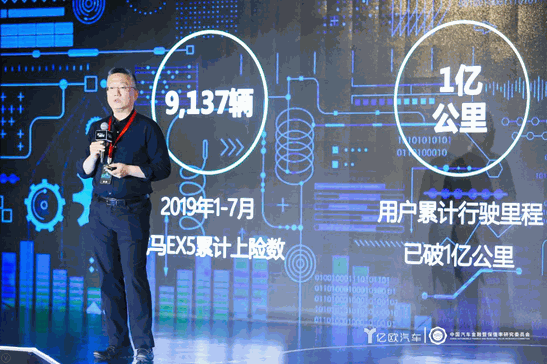
Shen Hui, founder, chairman and CEO of WM Motor, believes that for new energy vehicles, the most core part is the three-electric system, and the most important part is the battery. In the used new energy vehicle industry, there is generally no industry standard or method for evaluating batteries, which is a difficult problem.
(WM Motor founder, chairman and CEO Shen Hui)
In order to improve the current situation of low residual value for new energy vehicles, various car companies are voicing their opinions, and WM Motor, as one of the new forces in car manufacturing, is no exception. On August 21, WM Motor released its official certified used car brand. The company intends to build a full life cycle for used cars through direct purchase, direct refurbishment, direct sales, and direct leasing, forming a closed-loop automotive ecosystem of production, sales, use, and trade-in. The model of raising residual value at the source and reducing the cost of vehicle replacement for users may be feasible, but actual implementation requires more detailed consideration.
Three years ago, BAIC New Energy invested 180 million yuan in a replacement fund for the Beijing market to support owners in purchasing BAIC new energy vehicles. The project’s biggest beneficiaries were owners who bought the E150EV before July 1, 2014. Depending on the vehicle condition, the used car depreciation price was about 45%-55% of the market price (the Beijing market price was about 84,800-96,900 yuan), with an additional subsidy of 5,000 yuan, allowing replacement with the then-new EU260 and EX200 models.
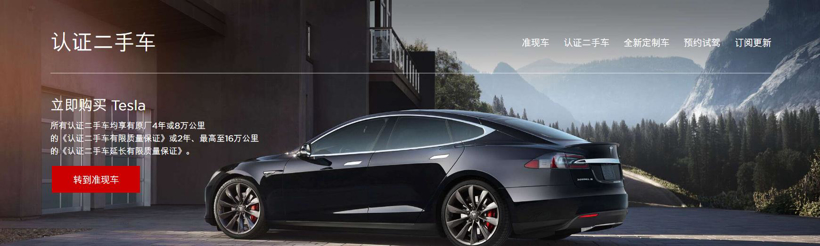
At that time, the trade-in program also involved owners of fuel vehicles with National I and National II emission standards, but they only received a 5,000 yuan trade-in subsidy. All trade-in customers were eligible for interest-subsidized loans of 2.5%-2.8%. Zhang Yong, general manager of BAIC New Energy’s marketing company, said at the time, "Since there is no precedent in the industry, we are also feeling our way forward." In 2015, Tesla also announced a three-year buyback plan, and Tesla's official website currently has a few certified used cars. Luo Lei, deputy secretary-general of the China Automobile Dealers Association, previously said, "Although new energy vehicles are developing well, it must be admitted that they have not yet reached the stage of market popularization. It will still take time for NEVs to become widespread as new vehicles; generally, the used car market only develops 3-5 years after new cars become widespread." There is no denying that the new energy vehicle market is rapidly "expanding," but compared with traditional fuel vehicles, it is still in its infancy. Although sales are steadily climbing, the absolute total volume is still small, and the used NEV market is far from mature. For used car dealers, NEVs are also a newly emerging business, with a serious lack of experience and standards in all aspects, which causes the circulation of the used NEV market to lag severely and leaves the residual value of used electric vehicles unsatisfactory.
Perhaps only by joining forces can new energy vehicle companies break down this "barrier," and the buyback policy is one important strategic move.